Media Round-Up: Books Read in 2026 So Far...
A collage of various books I read from January to Mid-February 2026.
2026 has not been a great year so far.
I reside in the United States, which if you don’t somehow already know, is currently under the leadership of a fascist regime sending federal agents to round up anyone they suspect of being an undocumented immigrant and sending them to concentration camps for deportation. To say things are dire would be an understatement and, in the chaos of it all, it can feel somewhat demeaning and trivial to write about the various pieces of media I’ve enjoyed. Is that really how I should spend my time with everything going on in the world right now?
However, I think the reality of this moment is that many people are turning toward art for comfort! Art cannot save us–I’d never make such lofty, idealistic claims. I love art and media criticism, but I agree with many fellow writers and artists that for as valuable as they can be, those things alone will not shift the foundations of our capitalist society to any extreme degree. Still, starting conversations, trying to make space for discussing the joy that art can bring us and the interesting complications and mistakes made along the way are tasks still worth partaking in. If we have nothing to turn to for comfort and for practicing critical thinking skills, then how can we keep going?
Musings about the current state of society aside, despite the state of the world and my continuing studies in grad school, I have been reading an awful lot in 2026. Last year, I started to track both manga and prose on my reading tracker of choice, StoryGraph. This was a decision that seemed inconsequential at first but has oddly challenged a lot of negative perceptions I had of myself as a “reader.” When I separated manga from reading prose fiction or nonfiction, I was viewing my reading habits through the lens of deficit. I would have thoughts like “I’m not reading enough prose” or “I’m not a reader like I used to be.” The reality though is that I read a lot. Is the vast majority of it manga? Yes! But, let’s be real, most avid readers read books of varying levels of literary challenge and merit throughout any given year.
Besides as a comics lover, I find the distancing of them from prose to be reductive and lame. It’s like implying Maus or any other classic, universally acclaimed graphic novel doesn’t carry within it extremely thoughtful use of visual language and prose. The whole exercise of treating one form of book as inherently more challenging and intellectual than another is pretty gauche and passe. So, to celebrate this one bright spot in a year otherwise filled with doom and gloom, I’m going to try to write a collage of some of my favorite or, at the very least, most interesting books I’ve read so far in 2026.
To start, I want to talk about various titles that I started reading much earlier than 2026. For many weeks in January, I spent my time catching up on various ongoing manga series I’d fallen behind on (at least in terms of their official English publications). This was something I meant to do near the end of 2025, but much of the end of that year was spent relaxing in the aftermath of my first term in grad school and I kept procrastinating on these due to a lack of motivation. At the beginning of this year though, some sort of manga bug bit me and I’ve been reading it voraciously since.
There were some relatively quick reads–series where I only had a volume or two to read. Of these, it’s hard to say much. The problem with discussing ongoing manga series, at least for me, is the fact that they aren’t finished and so it's hard to make any definitive statements about their overall quality on a volume to volume basis. Oftentimes, I’ve found my opinions on a series only really solidify at the very end when it becomes clear that the author is going to be able to weave together all the series' major plot threads into a satisfying conclusion. Maybe it’s the Wonder Egg Priority trauma, but this is one of the main reasons I struggle with ongoing serialized and episodic media.
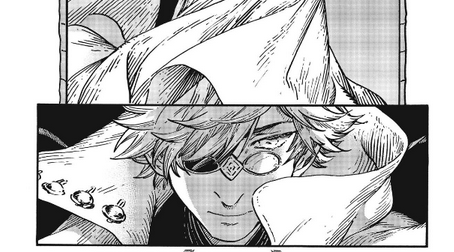
And yet, I still do read ongoing series! To kick us off, Witch Hat Atelier remains a delightful and lusciously illustrated children’s fantasy series in its thirteenth volume. What consistently impresses me about each new chapter, beside the aforementioned beautiful artwork, is Kamome Shirahama’s worldbuilding. I find it embarrassing that we still live in a world where a certain magical wizard boy still holds so much cultural cache when Shirahama’s worldbuilding works off the same central conceit–a magical world hiding secrets from the realm of everyday humans–and handles it with so much more thought and care. This most recent arc is a little long in the tooth, but I’m still enjoying it overall and looking forward to wherever Coco and friends journey next.
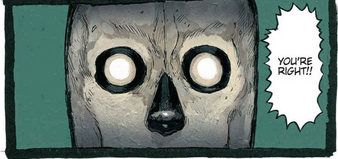
By comparison, I’m finding myself increasingly questioning the plot direction, or lack thereof, of Q Hayashida’s Dai Dark. Part of me questions if my mistrust of this series is less due to its general quality and more due to the fact that Hayashida’s previous work Dorohedoro is one of my favorite manga ever made. As such, there were going to be some inevitable misgivings with its follow up and I want to be clear that I don’t think Dai Dark is a bad read. Far from it, in fact! Hayashida’s strengths are fully on display in this manga: grotesque, messy linework and eccentric worldbuilding, a goofy cast of assholes messing things up for the forces of power surrounding them. The whole series is classic Q Hayashida hyperviolent, dark comedy hijinx. A character in volume seven screams “Meatball Spaghetti!” like he’s confronting a decades old rival and it's simultaneously funny and yet makes complete sense within this world’s strange lore.
My favorite aspect of this series so far has been its juxtaposition of its present day storyline with flashbacks to the childhood of the main character Zaha Sanko and his “dark paggy” Avakian. It captures that joyful, spontaneous unearthing of worldbuilding and character depth that made Dorohedoro tick. Alas, that main present day plot is far less compelling from a mystery standpoint compared to its predecessor. Particularly in volumes seven and eight, I found the reveals and developments less revelatory and more like wheel spinning. It doesn’t help that the stakes behind the hyperviolence are pretty weak–Dorohedoro certainly suffered from similar issues at times, but I think the cast being so much smaller and less diverse makes those faults a little easier to get stuck on.
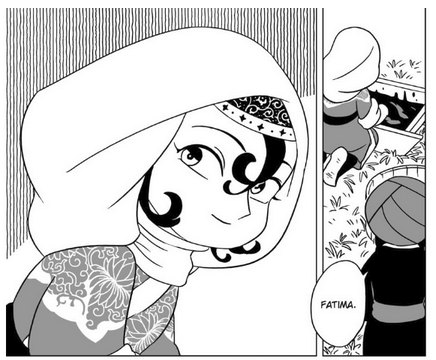
Comparatively, the next two manga have yet to shake my confidence too much! For the first, Yen Press published A Witch’s Life in Mongol’s first two translated volumes in 2025 and I feel pretty similarly about both. The series is clearly deeply researched and is tackling a historical period from the perspective of those often most forgotten by history, i.e. women and the marginalized. Managaka Tomato Soup’s style is simple and cartoony, but somehow gels perfectly with the references to Islamic art and mosaic work. Don’t take the soft and cute character designs as a sign of cute and pleasant vibes though–this series is quite dark and violent given the focus on the various imperialist invasions of the Mongolian Empire in the 13th century. It’s super interesting material historically, and Sitara’s revenge narrative is a strong center to focus on in this vast and complex political tale, but it is also admittedly quite dense and the time jumps and expository flashbacks are frequent and fast-paced.
I’m still excited to read more of the series–though based on the volume three release date I won’t be able to read any new material before the airing of Naoko Yamada and Science Saru’s anime adaptation starts airing in July. Naoko Yamada is one of my favorite directors, not just in anime but in film more broadly, so I’m incredibly excited for her to helm an adaptation of this series. Considering her previous TV work with the equally historically sprawling and complex The Heike Story, I suspect she’ll be able to handle the various character threads and timelines of this tale with relative ease, but you never know what could happen in the modern day production hellscape that is TV anime. The trailer looks gorgeous at least!
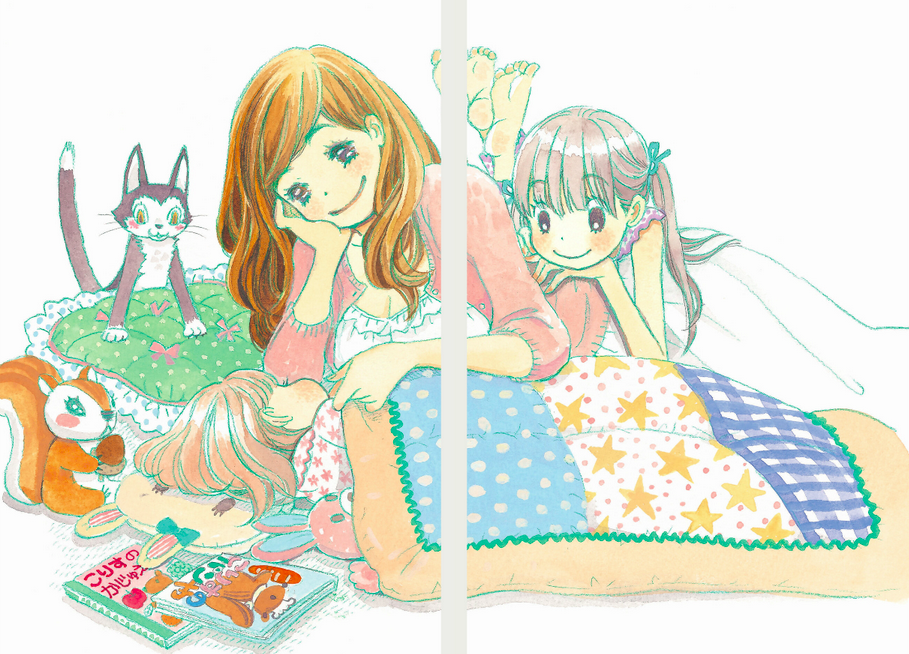
For the second title, March Comes in Like a Lion remains compelling in its fourth volume, but I’ll admit that the trickling English release from publisher Denpa LLC does frustrate me. I’ve been waiting to read this manga officially in English since the anime adaptation finished airing its second season back in 2018 and was so excited when Denpa acquired the translation and publication rights. Since then though it's been a lot of waiting for each subsequent volume as they seem to constantly delay their releases. I understand they're an indie manga publisher run by a handful of people, so I can’t really fault them for the delays. However, I wish they’d maybe not get my hopes up and wait a little while to state their release dates!
Each new volume reminds me of what I loved about the anime adaptation. Mangaka Chica Umino’s depiction of shoji matches, messy family dynamics, and the protagonist Rei’s depression remain sharp emotionally and visually. On a read through as a more critically minded adult, I do think Umino has an unfortunate tendency to write her otherwise interesting female character’s lives to revolve around certain male figures, but there’s enough strong character and thematic writing here to make those more questionable elements not sink the whole experience.
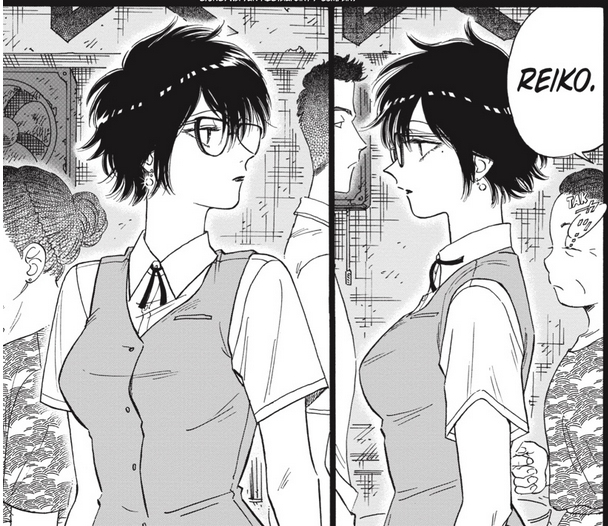
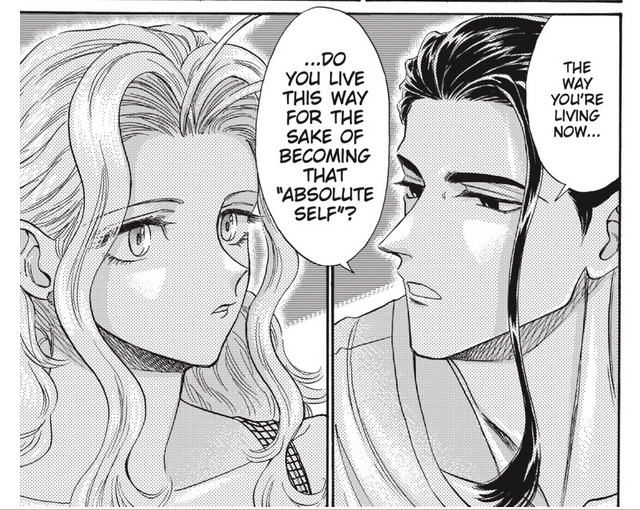
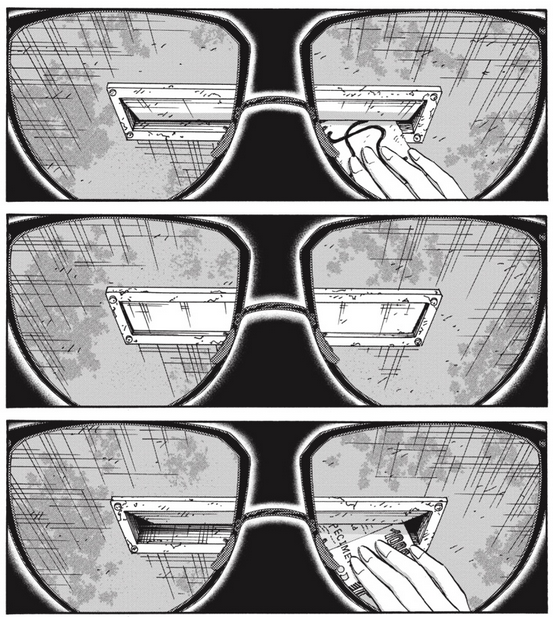
A Collage of Panels from Kowloon Generic Romance Vol. 10 by Jun Mayuzuki
Finally, at least in the realm of ongoing manga, I caught up with Jun Mayuzuki’s Kowloon Generic Romance. I started this series back in late 2023 and since then have been trying to hold off on reading it until it is over and done with. Alas, my anticipation got the better of me and I went ahead and started the series over from the beginning and am now caught up with the English release. In regards to serialized plots, Kowloon Generic Romance might be the one I’m the most worried about sticking its landing. The series is an interesting and compelling mix of a variety of genres. The titular romance is a key appeal, of course, but so is the light sci-fi setting of a rebuilt Kowloon Walled City constantly watched over by a mysterious sci-fi device called Generic Terra. These elements are then tied together via a mystery box plot that slowly unravels with each subsequent volume. Somehow, Mayuzuki manages to tow the line between relaxing urban slice of life, cute romcom hijinx, and eerie mystery without the series ever coming across as incoherent.
I think a lot of that is a testament to Mayuzuki’s skill as a comics artist. Her character designs are sleek, attractive, and sensual, but her paneling deserves equal praise. She has a way of making the reader’s eye glide across the page. One subtle touch I love is the way she’ll have the direction of screen tone in one panel slope diagonally into the next, guiding the reader along the way. It feels and looks effortless when it really isn’t.
Yet, the mystery box elements of the series are somewhat concerning. It’s clear from some of the author afterwords that aspects of the series, mainly a lot of the choices relating to the fun and endearing cast of side characters, have been ideated during serialization. This isn’t unexpected for a serialized manga, but considering so much of the tension of this series revolves around its core mysteries, I worry the final reveals will feel confusing or unearned in the context of the build up to them. It’s clear in volume ten that the next handful of volumes are going to be the climax of this story and as such I can’t help but worry about what comes next, particularly given the cliffhanger at the end of volume ten. Still, I’d be lying if I said the series wasn’t a fun and smooth reading experience. I’d also be lying if I didn’t admit that I wish Reiko would just ditch sad office boy Kudou for her gal pal Yaomay, but that’s a conversation for another time.
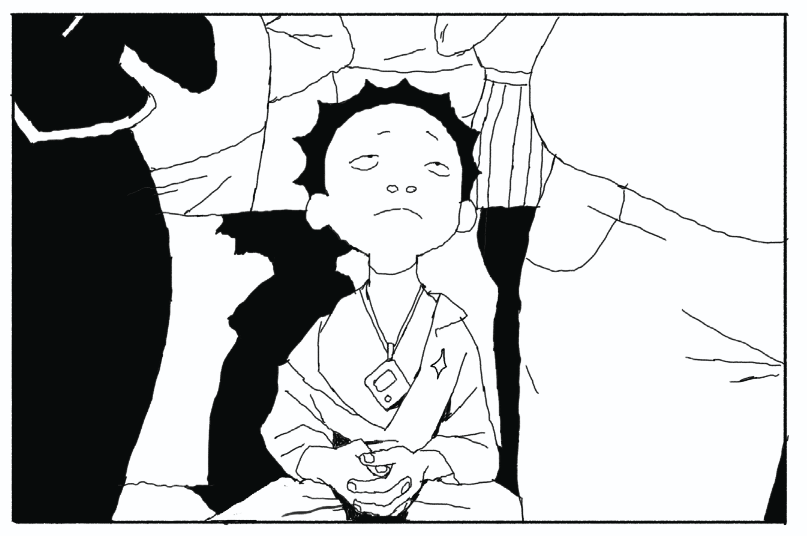
In terms of prose and Western graphic novels, I’ve been a little bit less productive on that reading front, but have still managed to read a handful of really interesting titles. The first of these was Gleem by Freddy Carasco. This is a graphic novel published by Drawn & Quarterly, an indie-comics publisher from Canada that has published some big prestige titles in the last couple years (mainly, Kate Beaton’s excellent autobio comic Ducks: Two Years in the Oil Sand). I read this because I knew it had been previously published by Peow Studio–another indie comics publisher I’m a big fan of–and so I was eager to check it out when I spotted it at a local indie-comic and zine shop in my hometown. Thankfully, I wasn’t disappointed. Gleem is a fantastic collection of interweaving short stories that really manages to paint an compellingly cerebral and mundane atmosphere for its cyberpunk world. There are moments of high-flying psychedelia, juxtaposed with the casual cruelty of robot street violence, and the quick, fleeting way adolescence can slip through one’s fingers. If nothing else, it’s a stunning visual experience–one which makes me eager to read whatever Carrasco cooks up next; hopefully in a more long form focused work.
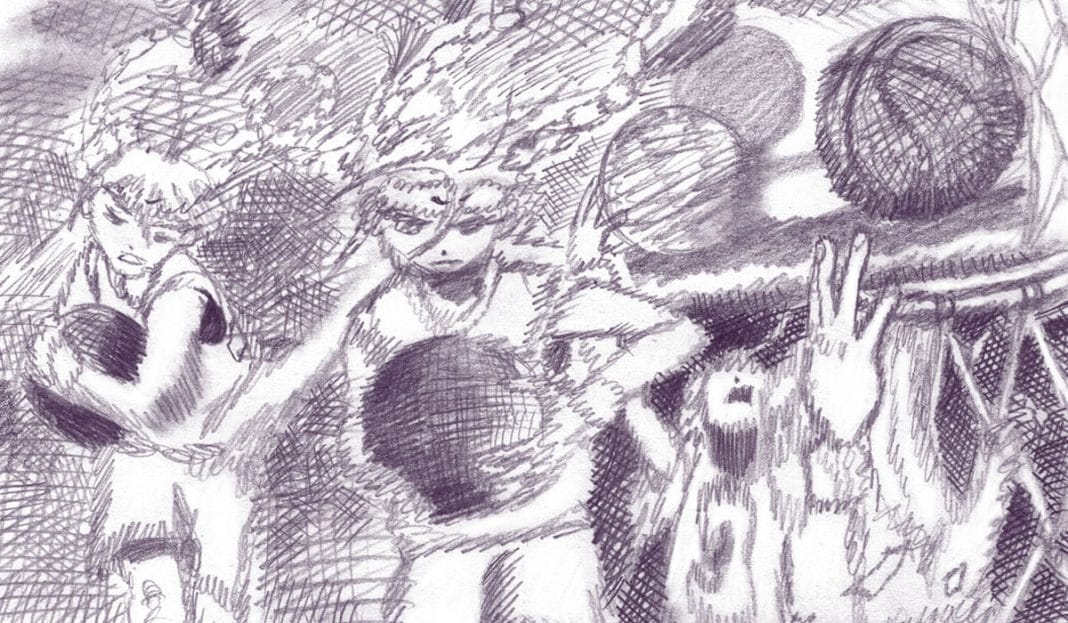
The other graphic novel I read was a similarly indie affair. Basket, which is illustrated by Marie Derambure and written by Paco Moccand, is a coming-of-age, middle school basketball sports comic published by Lucky Pocket Press. I stumbled across a blurb about this in this Best Comics of 2025 list from the Comic Book Herald. I was instantly struck by the art style with its scribbly and colorful cover art and intrigued by the description of it as “manga-esque” (I’m so predictable). In the spirit of my ongoing journey to try to read more non-Japanese comics, I went ahead and purchased a copy out of curiosity.
Luckily for me, Basket is quite the fun read. Descriptors of it as being inspired by manga are accurate as Derambure’s emotive art and floating fragmented paneling simultaneously capture the sentimentality of shojo and the thrill of a sports shonen series. The result is a charming, if a bit basic, underdog sports drama that is carried primarily by Moccand’s deeply earnest writing and Derambure’s subtly brilliant artwork. In particular, Derambure’s rough line work and rough proportions may not appear elegant on the surface, but beneath that aesthetic exterior is a control of pace and tone that is quite strong. The way time is stretched and squashed is compelling: characters multiply on the page as if in time lapse to capture the speed of them dribbling past an opponent, pages turn into collage as we witness a training montage. The comic’s character designs, while simplistic, are charming in their awkward, lanky glory. There’s something about the visual style that gels perfectly with the adolescent, middle school drama on the page–like you are reading a middle schooler’s basketball comic they scribbled on their notebook paper after reading Slam Dunk for the first time.
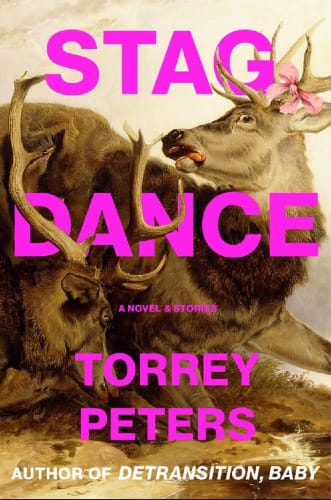
With prose, the first traditional fiction novel I finished this year was Torrey Peter’s latest work: Stag Dance: A Novel & Stories. Something I’ve been inspired to do recently by a class I’m taking about Reader’s Advisory in public libraries is to read more contemporary literary fiction (I’m currently reading a Sally Rooney novel for the first time, it’s… interesting). The class made me realize that despite how much I claim to like literary fiction, the amount of authors I’ve actually read from the genre is pretty limited. However, Torrey Peters is actually one of the few authors I have been keeping up with–though with only two professionally published works to her name that admittedly isn’t a daunting task. Peters’ first novel Detransition, Baby is definitely one of my favorite novels I’ve read from the past decade (though that again isn’t saying much given how little literary fiction I’ve read from the 2020s). As one of the few trans literary authors working today, her work is sharp in its examinations of gender identity. Particularly for Detransition, Baby, the way she explored topics relating to parenthood and the struggles trans women face in creating a family and having children is rendered in ways at once deeply empathetic and heartwarming, but also not without a touch of dark humor and levity. Peters’ characters are very rarely neat and tidy people, pushing on the idea of what makes “good representation” by simply depicting her characters as well… messy humans trying to work through internalized social expectations.
Stag Dance and its four stories (essentially four novellas of varying lengths despite what the book's subtitle may tell you) operate in a similar vein. The main throughline in the collection is definitely gender identity with each piece tackling a different facet of it: solidarity in the trans community in “Infect Your Friends and Loved Ones,” the messiness of pre-transition relationships in “The Chaser,” the construction of gender in masculine dominated spaces in the titular “Stag Dance,” and the intersections of identity and fetish in “The Masker.” None of the characters in these stories are perfect people–some are even deeply cruel toward others in a way that may be hard to stomach for some–but Peters is a sharp writer who knows how to zoom out and observe human behavior in order to make broader points about the flimsiness and cruelty present in society’s gendered norms and hierarchies. Stag Dance’s stories never make the reader uncomfortable just for the sake of shock value. Instead, the pieces in this collection confront the reader in order to make them think about their own internalized gendered biases, stereotypes, and perceptions.
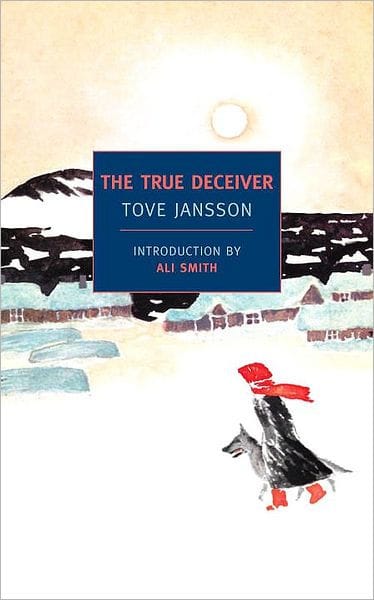
Speaking of perception, the next prose book I read oddly tackles this topic, but more from the perspective of interpersonal social norms. The True Deceiver by Tove Jansson (yes, the same Tove Jansson who wrote the Moomin comic strip) is a short and clipped novel about a young woman named Katri Kling who lives in a small, isolated Finnish fishing village with her brother Mats. Born from the union of her now deceased mother and an outsider father who abandoned the two of them, Katri has developed a philosophy of refusing to buy in social niceties as the rest of the town sideyes her and her intellectually disabled brother from afar. In the same way the novel’s prose is curt and simple, Katri prefers to avoid small talk and cut to the chase of any given conversation and avoid lying to anyone about her intentions. This causes some difficulty in her plans to befriend and ultimately move in with a local reclusive older picture book artist, Anna Aemelin, whose passivity and outward kindness mask a deep naivety and vulnerability.
Despite being a fan of comics, I have yet to read any Moomin. As such, you may be wondering why I ended up reading one of Jansson’s prose works. Well, to try to intellectualize what ultimately was a pretty impulsive decision, I was mostly curious due to the book’s English publisher, New York Review of Books, who I’ve been reading a lot of over the past few years. I find NYRB’s choices in publication to be interesting–literary, but not necessarily the kind of classic material you get recommended all the time in high school or undergraduate English literature classes. The True Deceiver definitely fits this mold. It’s a book that is quite pointed in its social observations of this quiet and wintry fishing village where townspeople gossip about Katri and Mat’s outsider father making them unlike any one else in the town. There’s a tension that builds expertly over the course of the novel where you simultaneously understand Katri’s desire to shirk off the social routines of this judgemental small town in order to give her and her brother a form of financial security, while also knowing her bluntness and cruelty may ultimately destroy the very threads that hold together Anna’s naivety and, by extension, the artistic practice she has dedicated her life to.
Reading this short novel has definitely made me more curious about Moomin, which from an outside impression seems completely the opposite of this melancholic little book focused on the mundane and depressing social realities of its characters. It also makes me want to seek out more of Tove Jansson’s prose work, most of which have also been translated and published in English by NYRB. It’s definitely a work I recommend–its brevity and coldness mask a smart, humane observation.
And that’s all for my round up of everything I’ve read so far this year. The only book I skipped over (besides certain novels and series I’m currently in progress with) was the first volume of Stop! Hibari-kun–mainly because only the first volume has been published at this point in English and I’m not entirely sure how I feel about the series based on this introduction alone. I’ll probably discuss it and future volumes in another post later this year.
Anyways, as always, thanks for reading.